
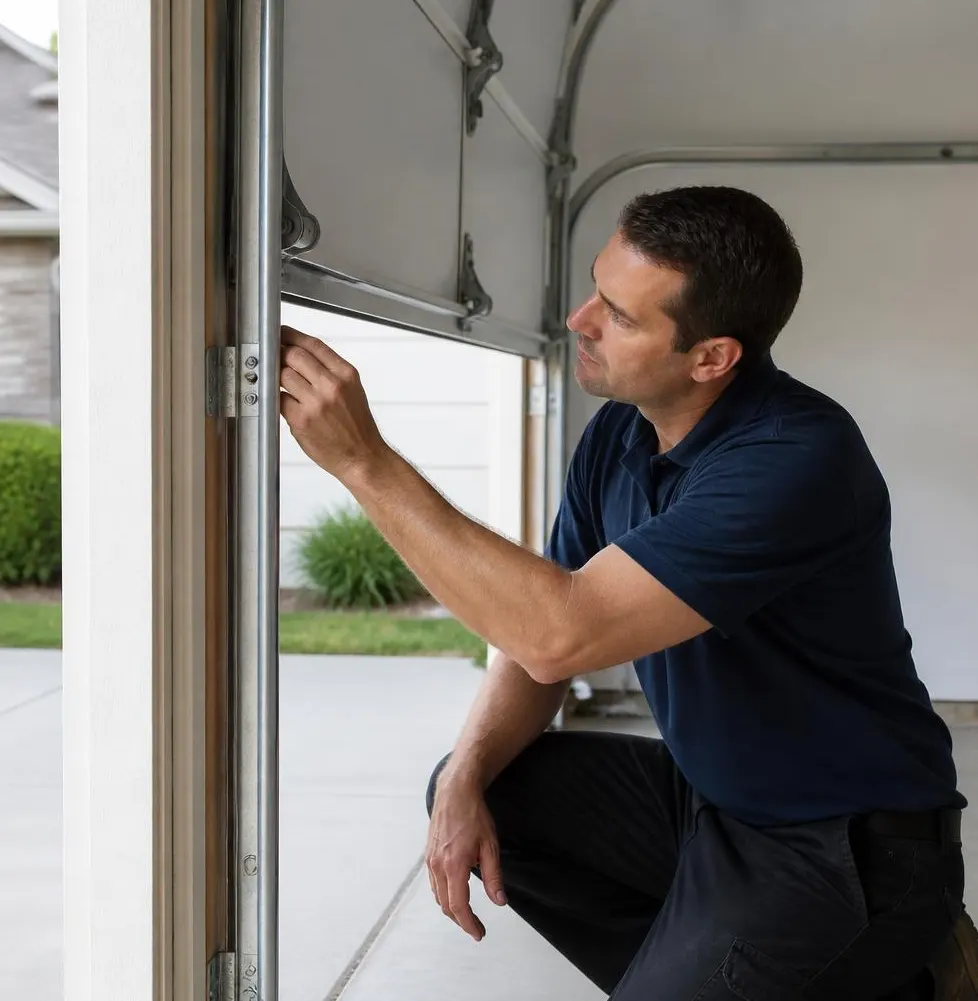
What a Technician Sees After a Windy Night
The calls usually come in the morning after a rough overnight storm. A homeowner walks out to find the garage door bowed outward in the middle, one or two panels dented or cracked, or the door sitting crooked on bent tracks. Sometimes it's worse — the door has come completely off one track and is wedged at an angle, held up by nothing but the opener arm. In almost every one of these calls, the door looked fine the week before. Nobody noticed the worn rollers, the loose track bolts, or the weatherstripping that had pulled away from the frame until the wind found that weak spot and turned it into a real problem.
Why the Garage Door Is the Weakest Wall in the House
Most exterior walls are solid, braced, and tied directly into the home's frame. A garage door is a large moving panel held in place by rollers, tracks, and a spring system — not a continuous structural wall. It's also usually the single biggest opening on the house, which means it catches more wind pressure than any other surface. When high winds push against the door, that pressure has nowhere to go but against the panels, the track, and the hardware holding everything together.
If the door fails — buckles, pops off the track, or blows inward — wind can suddenly pressurize the whole garage and, in some cases, put stress on the roof structure above it. This is why building codes in many high-wind regions require garage doors to be rated for wind pressure, and why older or lower-end doors installed years ago often don't meet that standard. A door that's never had problems on a calm day can still be the first thing to go in a real windstorm.
Signs Your Door Isn't Ready for Storm Season
- Visible flex or bowing when the door is closed and wind hits it, even mildly
- Rust or pitting on the tracks, often from winter road salt splashing up or sitting moisture
- Rollers that wobble or bind instead of rolling smoothly along the track
- Gaps in the weatherstripping along the bottom or sides, letting daylight or wind through
- Loose or missing track bolts, especially near the top where the track curves
- A door that's noticeably lighter or thinner than current standard doors — common on older installations that were never built with high wind loads in mind
Any one of these on its own might not cause a failure. Combined, and hit by a sustained gust or a sudden downburst during a fall storm, they add up fast.
Practical Steps Before the Next Big Storm
Tighten and Inspect the Hardware
Track brackets and roller hinges work loose over time from everyday opening and closing. Going around with a wrench and checking every bolt takes less than half an hour and is one of the cheapest things a homeowner can do to reduce storm risk.
Check the Rollers and Track Alignment
Rollers should turn freely without grinding or catching. If a track is bent even slightly, the door won't sit flush, which creates a pressure point the wind can exploit. Minor bends can sometimes be corrected; more significant damage usually means the track section needs replacing.
Replace Worn Weatherstripping
Beyond keeping out rain and cold air, tight weatherstripping helps the door seal evenly against the frame, which matters when wind is pushing against it. Replacement seal kits are inexpensive and a reasonable DIY project for most homeowners.
Consider Bracing Kits or Reinforcement
For older sectional doors without factory wind bracing, aftermarket horizontal struts can be added to stiffen the panels. This is a middle-ground option — not as strong as a wind-rated door built for it, but a real upgrade over an unreinforced older door, and far less expensive than full replacement.
Test the Opener's Manual Release and Backup Power
Storms in this area often come with power outages. Know how to manually disengage the opener so the door can be operated by hand if needed, and consider a battery backup opener if losing power during a storm has been an issue in the past.
The Trade-Off: Reinforce vs. Replace
Bracing kits and hardware tune-ups extend the life of a door that's otherwise in decent shape. But if a door is already showing rust through the panels, has a track that's been bent and straightened more than once, or is simply old enough that parts are hard to source, reinforcing it is putting money into a door that's still going to be the weak point. In that case, a new wind-rated installation is the more durable fix, even though it costs more upfront — typically a few hundred dollars more than a standard door, depending on size and materials.
When to Call Schererville Garage Door
If a storm has already left the door bowed, off-track, or struggling to open and close evenly, that's an emergency garage door service call — don't force it open or closed, since a stressed door can fail suddenly. We'll also do straightforward garage door maintenance visits before storm season hits: checking tracks, rollers, bolts, and weatherstripping, and letting you know honestly whether reinforcement makes sense or whether the door's age means installation is the smarter long-term move.
If you're in Schererville, Dyer, St. John, Crown Point, Munster, Highland, Griffith, or Merrillville and want your garage door checked before the next round of fall storms rolls through, give Schererville Garage Door a call — we'll take a look, explain what we find in plain English, and get it handled.